Hopkins and Alfred Column and Splat Clock
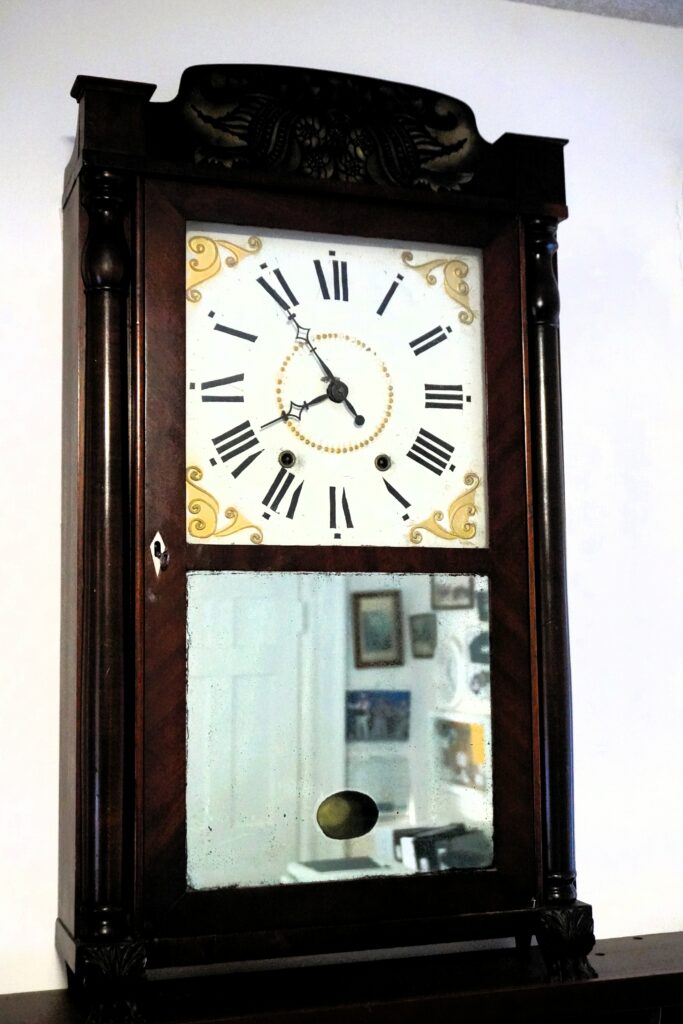
Donated by the Thierry Family in 2017
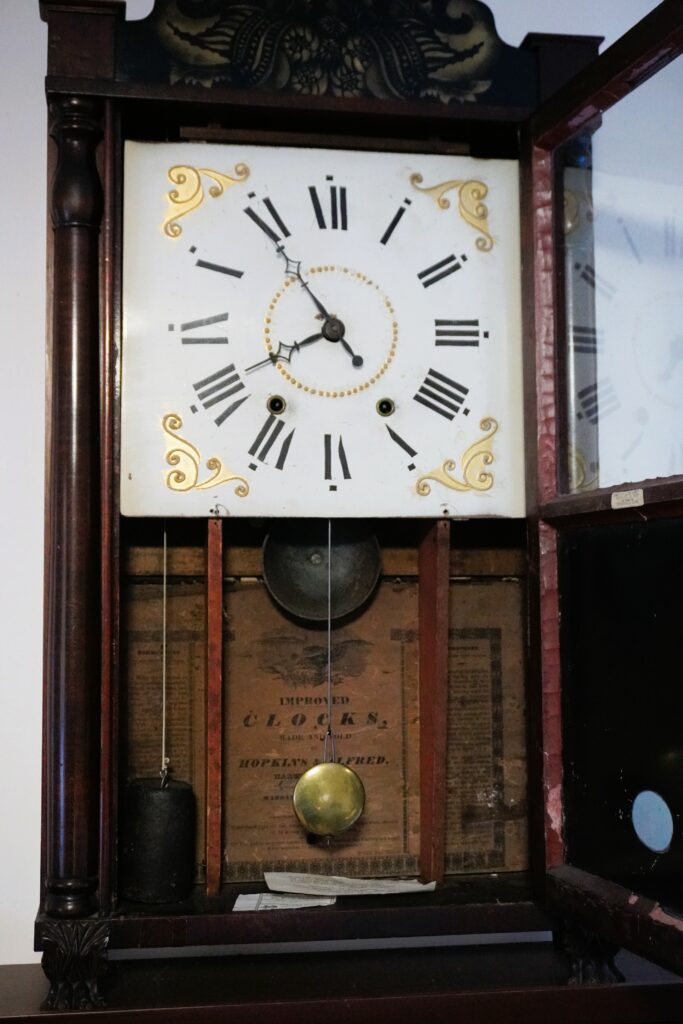
Specifications
Height: 30 3/8″ from the top of the splat to the bottom of the feet
Width: 16 7/8″ at the gallery; 17 1/16″ at the base
Column Length: 23 1/5″
Feet: Extend 1½” below the case, measuring a total of 2 3/8″
Door Dimensions: Height: 23 1/5″ Width: 13″
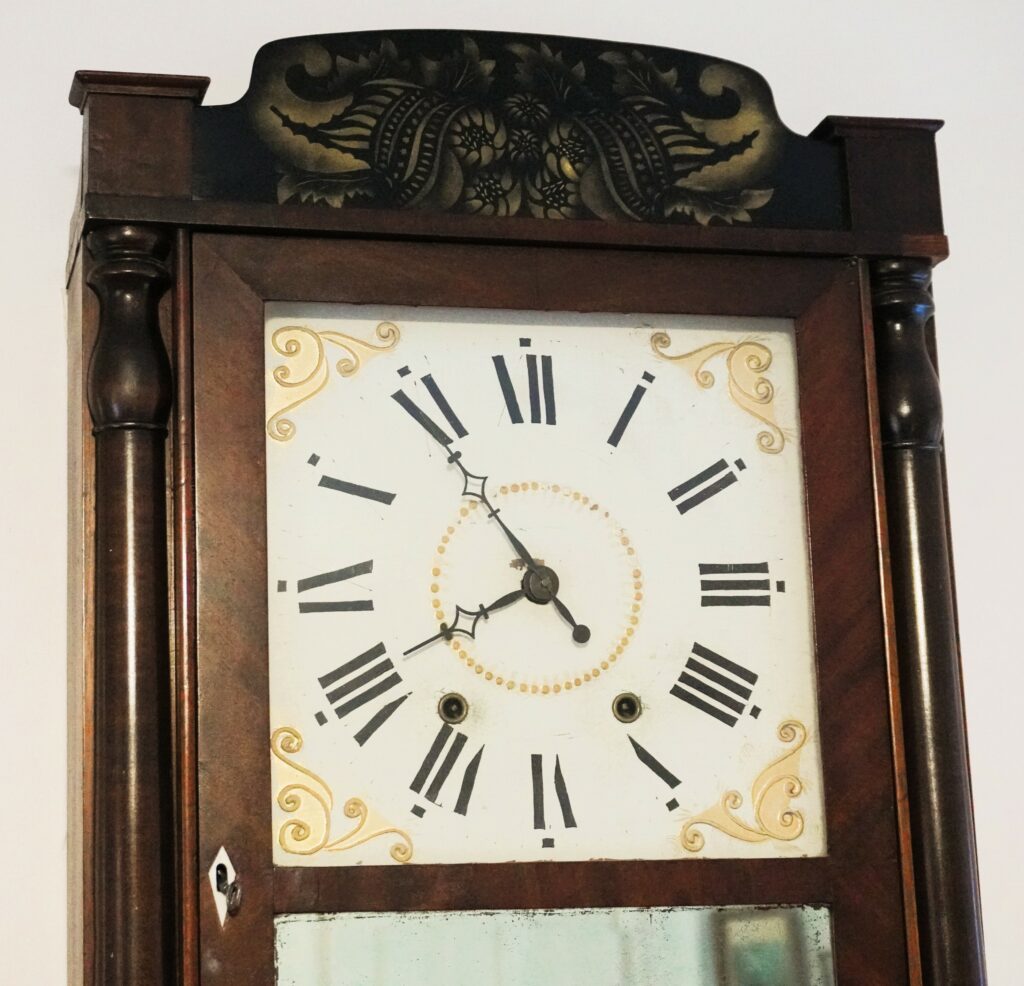
This 19th century Hopkins and Alfred Column and Splat clock exemplify such features such as roman numerals, decorative columns, floral motif, ornate corner scrolls, and a pendulum window. The original components comprise a gallery, mahogany case, mahogany lion feet, wooden dial, hands, iron weights, pendulum bob, iron bell, wooden works, door key, single tin pulley cover, and paper label.
Litchfield, Connecticut evolved from a frontier settlement into a commercial center within its first century. Settled in 1721 by skilled residents from Hartford and Windsor, one prominent early settler was Asa Hopkins, a wood turner who established himself in Northfield, a Litchfield section. Four generations of Hopkins craftsmen adapted through Litchfield’s changing post-Revolution economy, producing spinning wheels, clock reels, clock works, and musical instruments.
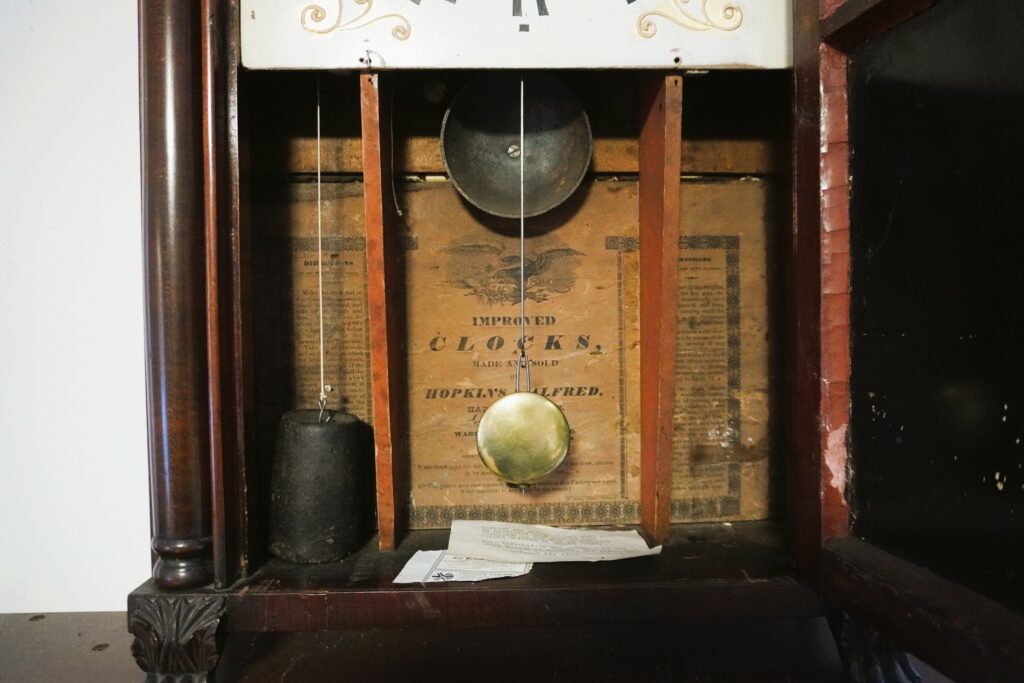
The paper label was produced by H. Adams from Litchfield, CT; Henry Adams served as editor of the Litchfield Enquirer from 1829 to 1842.
This clock underwent repairs in June 1867 by Nathanial H. Hart from Unionville; it required significant attention for broken gears among other issues—not utilizing standard gear trains but exhibiting high quality overall. Interestingly enough, Nathanial Hart inscribed his name and location onto the lead of the pendulum bob along with affixing a small paper label to the door.
For more information on Asa Hopkins:
Four Generations Turn and Adapt their Business | My Country Blog – Litchfield Historical Society