First District School: From Founding to Restoration
During a 1741 Harwinton Town Meeting it was voted that a tax would be levied to maintain a school which would be open for some part of the year. At first schools were held in homes. Later one-room schools were built. Students of all ages were under the guidance of one teacher. In 1748, Harwinton appropriated funds to hire schoolmasters (male) and school dames (females). These teachers were required to sustain good moral character; write legibly; and be able to read and spell correctly. Teachers were usually between 16 and 20 years of age and often boarded with a family in town. Most teachers had only a district school education themselves.
Note: The First District Schoolhouse was also known as “Center School.”
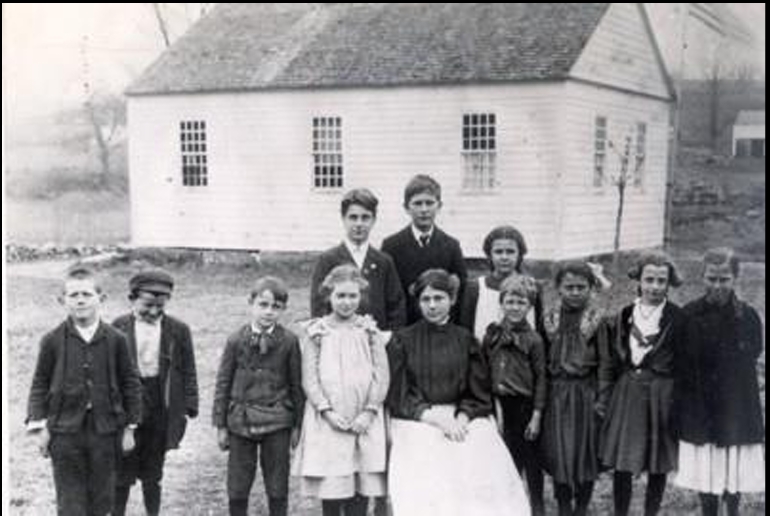
In 1874 Harwinton had 12 school districts. Although school was not mandatory, children usually started school at the age of four, learning the alphabet and then moving on to reading. At about seven years of age students began to study geography, followed by penmanship at age nine, and arithmetic and more difficult reading between the ages of ten and twelve. Older students worked on history and grammar. The school day usually was from 9-12, followed by a break for lunch, and classes again from 1 to 4. Students walked to school most days, and often went home for lunch. Bible readings and prayers, as well as penmanship were important parts of the school day. Each family decided whether or not a child would attend school on a given day. Sometimes chores at home (especially during planting and harvest times) required students to stay at home to help.
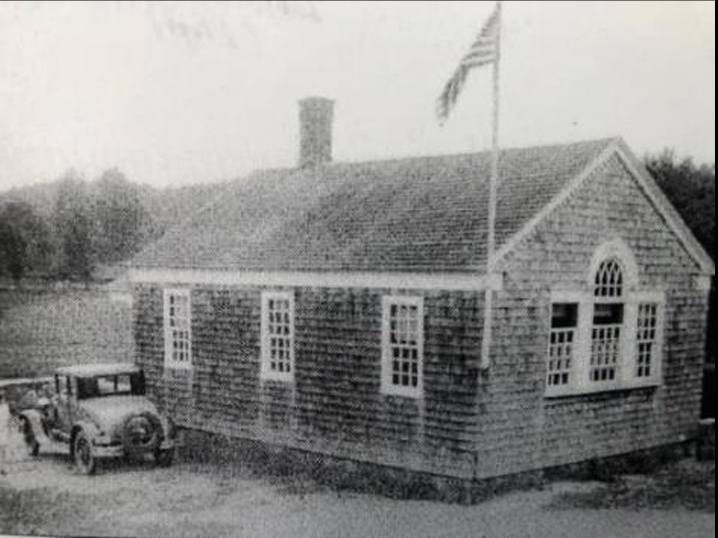
Raymond Bentley describes the 1924 schools in History of Harwinton, “With a few exceptions, there was little difference in those buildings and the ones in use one hundred years ago.” Center School was one of the exceptions! In 1924 Center School was one of two schools in Harwinton to have furnace heat- the other schools were heated with wood stoves. When wood was delivered, it was split by the older boys (5-6 cords of wood a year) and students helped carry wood to the basement. An older student called “the fireman” arrived by 7 a.m. to get the fire going so the room would be warm by 9 o’clock. One of the students was paid twenty-five cents per week to put wood on the fire if it got chilly and to take out the ashes. Only one school, Center School, had running water. Newman Hungerford installed the water as a memorial to his wife, Helen Wilson, who had taught at the school before their marriage. The water was gravity fed from the top of Center Hill. All of the schools had outhouses (outside toilets).
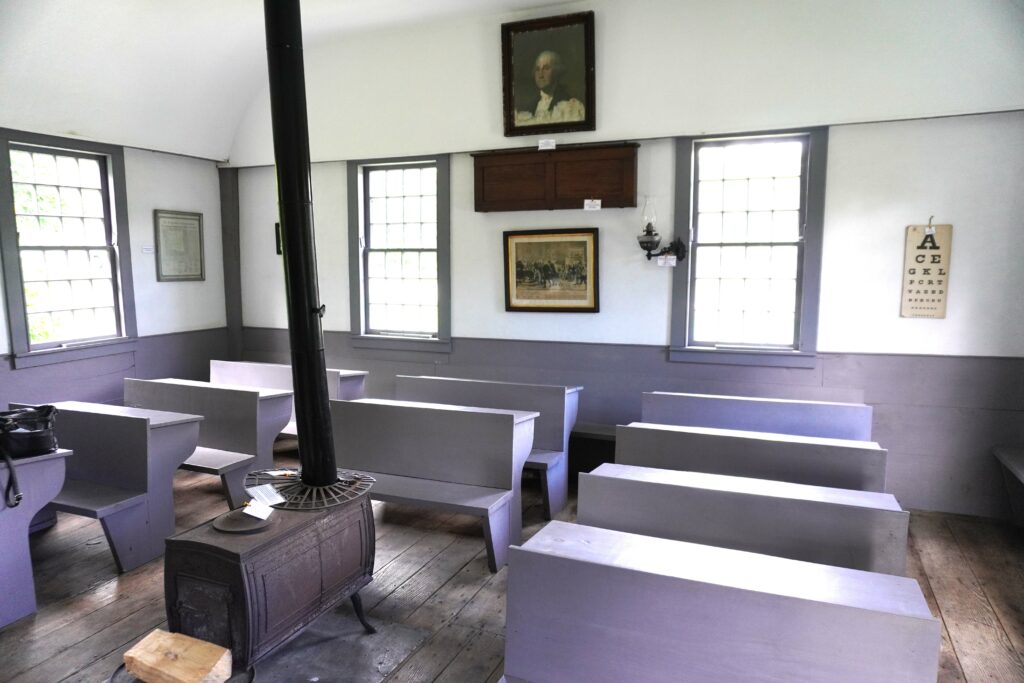
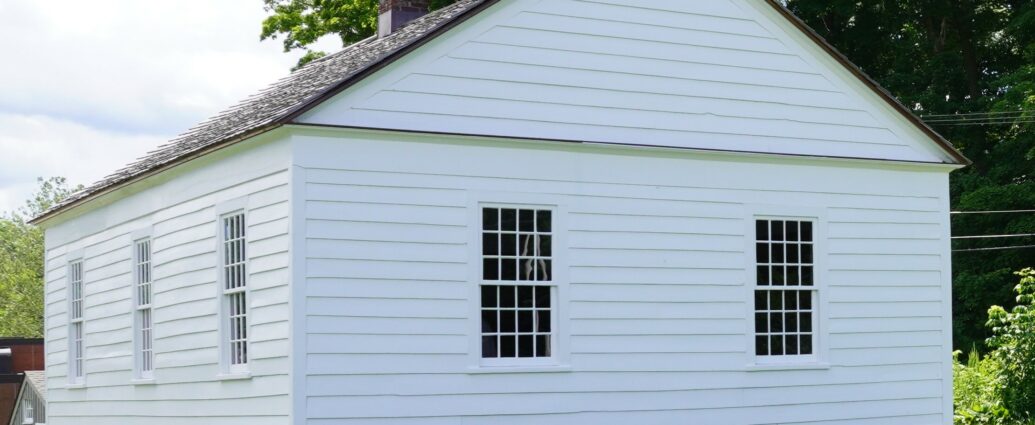
In this 1930 photo Center School was located along the banks of Lead Mine Brook at the bottom of Center Hill (South side of Route 4). It replaced the first school building that was originally located on the town green. William McConway (the Pittsburg industrialist who had the beautifully constructed walls on South Road built around his “vacation house” properties) is said to have rebuilt Center School in exchange for Central Academy. John F. Peckham described this school in the one-room school students’ Book of Memories: “Center School as we see it today has been restored to its original classic simplicity, but in 1930 it boasted some alterations that the pupils thought special. These included a large arched window on the wall, shingles on the exterior, and a furnace in the cellar which had a register in the floor through which hot air was circulated to provide warmth, unlike most of the other schools which were heated by pot-belly stoves.” In 1932 Center School became the first school to have electricity installed. . . while the students watched! The town did not fund the enhancement- students raised the $100 needed through performing plays. Students were very proud of the globe light that was hung in the middle of the ceiling! In addition, students used the funds they raised to purchase a small radio. On weekends and during vacations, students had the opportunity to bring the radio home to listen to Amos and Andy, Fibber McGee and Molly, and the news.